Extreme skiing is a combination of two sports – mountaineering and skiing. Essentially, it is ski-mountaineering adapted to high mountain areas and that takes place on steeper slopes (above 45 degrees) or on more exposed areas, where every slide or fall represents a serious risk.
In 2000, Davo Karničar succeeded in achieving the first ski descent down Mount Everest in a single run. " We have to be so skilled in alpine climbing that we can set out on an individual tour. Our strength and endurance are no longer important – we must have this by default. We must master hiking and climbing in the mountains. This is the most risky thing about solo ascents. It is important to be able to make the right decision about yourself, to choose the right goals, to estimate conditions well. Because when you ski, there is no partner at the other end of the rope who will correct your mistake," explains Karničar.
Extreme skiing includes different ways of assessing levels of difficulty, which consider more elements, particularly inclination and exposure. In Slovenia, we most commonly use the French scale, which has seven basic stages of difficulty with regard to skiing exploits (I–VII). The scale covers all levels of difficulty from ski-mountaineering to the most complicated alpine skiing. In the case of a difficulty level of III, ski-mountaineering passes to extreme skiing without any rigid border.
But extreme skiing means we must climb the mountain face; we must have and use alpine climbing skills, change gear at our summit, and only then, ski downhill, at best following your ascent trail. The difference between ski mountaineering and extreme skiing can be well defined with slope inclination. Inclines up to 30–degrees still represent ski-mountaineering. Beyond those inclinations, the skiing becomes more dangerous and our activity gets a new name. It is a fact that on slopes with an inclination above 30 degrees, the avalanche risk is high – something we must always be aware of in both ski-mountaineering and extreme skiing, says Karničar.
Ski-mountaineering can be taken up by someone with moderate skiing knowledge. All they need is someone who knows how to hike with skis and has basic knowledge about the risks in the mountains in winter. But we can only take up extreme skiing, if we have perfect alpine climbing skills.
The beginnings of extreme skiing on high Alpine faces date back to the mid 1930s, but this sport really became popular in the early 1970s; soon also, in Slovenia.
What is extreme skiing?
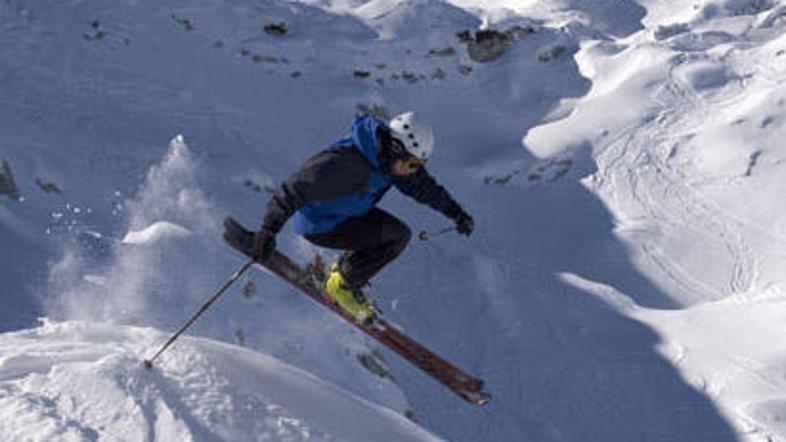
Extreme skiing is a combination of two sports – mountaineering and skiing. It is ski-mountaineering adapted to high mountain areas.


